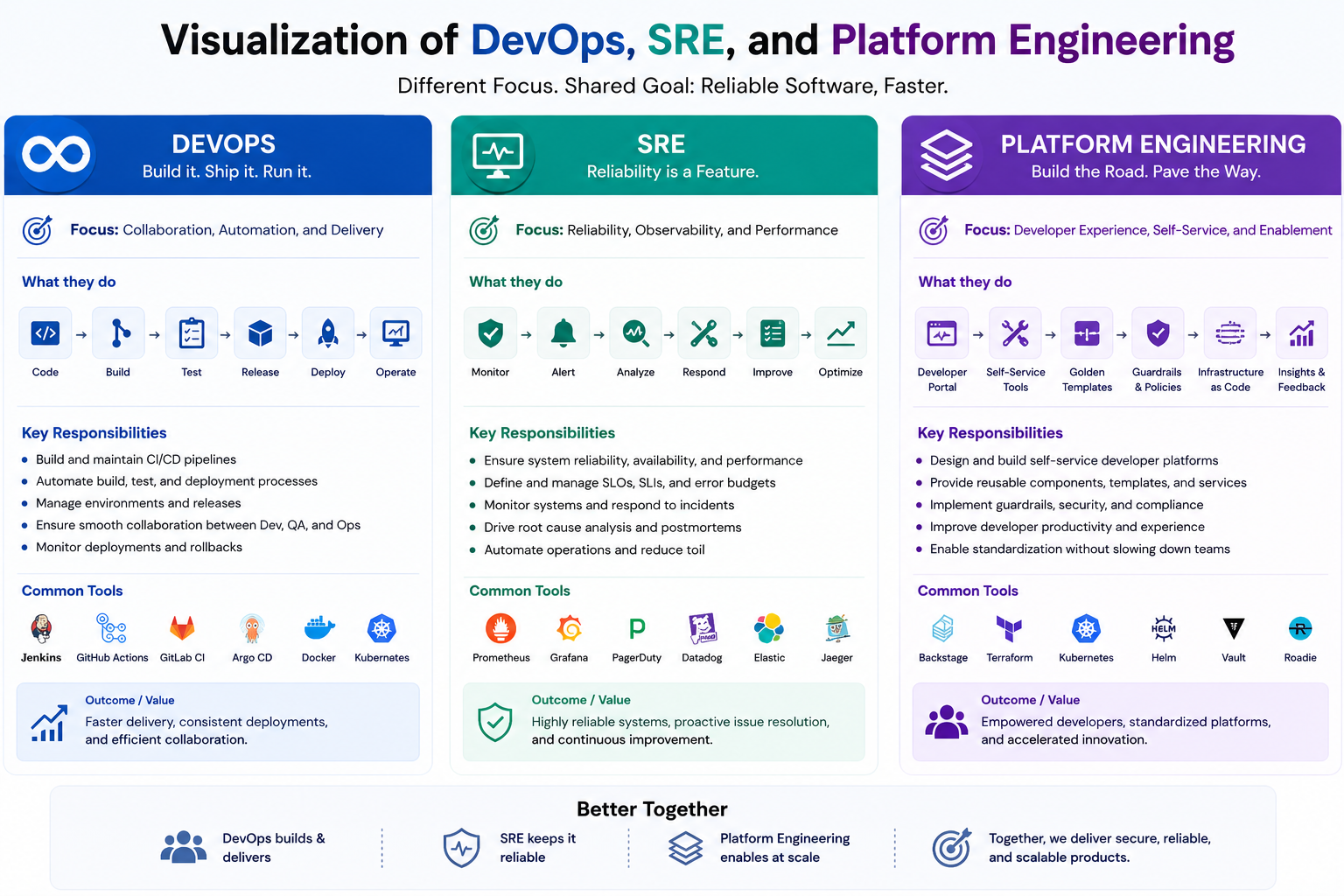
As an engineer dedicated to connecting business architecture with software engineering, I often see companies struggle when adopting modern development practices. The term "DevOps" was originally conceptualized as a cultural methodology to unify development and operations teams, aiming to break down silos. Today, it frequently feels more like an alphabet soup of technical titles and certifications. From "Platform Engineers" and "Site Reliability Engineers (SREs)" to "DevSecOps Managers," this expanding glossary of job descriptions can make it difficult for tech leaders to build effective teams that genuinely accelerate a product blueprint.
Understanding these distinct roles is crucial for aligning your project blueprint with technical execution. An SRE is essentially what happens when you treat operations problems as engineering problems, prioritizing service reliability and automation. A Platform Engineer, by contrast, builds an "internal developer platform" that standardizes the developer experience, abstracting infrastructure complexities so development teams can deploy features faster and with higher compliance. Implementing a structure, whether based on simple database modules or advanced microservices, must begin with clear ownership—defining who manages the pipelines versus who designs the architecture.
Ultimately, a successful digital transformation isn't just about hiring the right acronyms; it’s about establishing the right technical alignment and quality control. Whether you utilize automated verification plans to validate each release or robust monitoring frameworks for post-deployment analysis, the goal remains the same: shipping faster without compromising stability. Effective DevOps architecture isn't about fitting a specific label, but rather about creating a light, responsive system where both technical stack engineering and long-term business logic can thrive seamlessly in today's demanding digital landscape.


