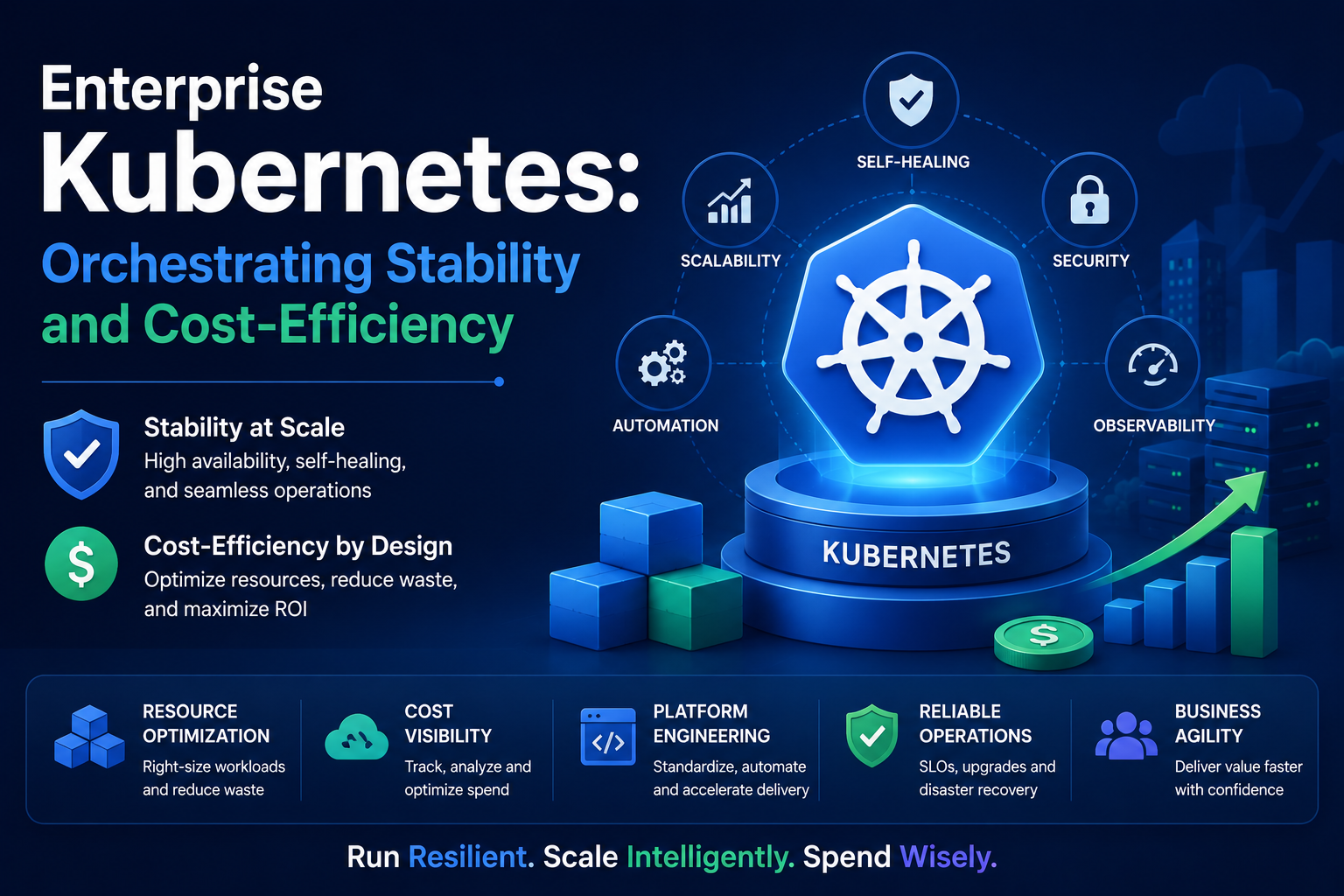
As applications evolve into complex, distributed systems, the challenge shifts from writing code to managing its operational lifecycle. For enterprises aiming for true digital scalability, Kubernetes (K8s) has become the de facto standard for container orchestration. Operating at the intersection of development capability and business logic, K8s provides the platform required to deploy resilient, self-healing applications. However, successful technical alignment requires more than just launching a cluster; it demands a strategic approach that maps infrastructure deployment directly to business milestones and performance requirements, ensuring that complexity doesn't compromise conversion metrics or product viability.
When engineering high-performance modern web platforms on Kubernetes, optimizing the resource logical data objects is critical for codebase maintenance and managing operational costs. Effective orchestration utilizes reusable component hierarchies and modular configuration modules—abstracting infrastructure complexities so development teams can deploy features faster and with higher compliance. True cloud-native technical leadership means implementing automated verification plans within the CI/CD pipeline to validate each container release. By prioritizing granular resource controls and efficient cluster autoscaling, digital systems remain light, ultra-responsive, and ready to absorb market changes without accumulating massive technical debt.
Ultimately, a successful Kubernetes adoption isn't just about technical migration; it's about establishing a foundation of quality control and operational visibility. As applications grow in complexity, integrating thorough, automated test cases secures your logic layer and safeguards critical user interactions. Mapping your cluster performance data to business strategy allows for informed FinOps practices, ensuring cloud spend directly drives concrete business growth. By treating orchestration performance itself as a core active business driver, technical leaders deliver production-ready platforms that perform fluidly at scale, turning sophisticated architectural requirements into sustained enterprise value.


